Existing synthetic turf

Turf Replacement

Turf replacement begins with diagnosis of the existing installation, then separates complete or partial removal, disposal, base corrections, drainage, matching limits, seams, edges, infill, and post-installation care.

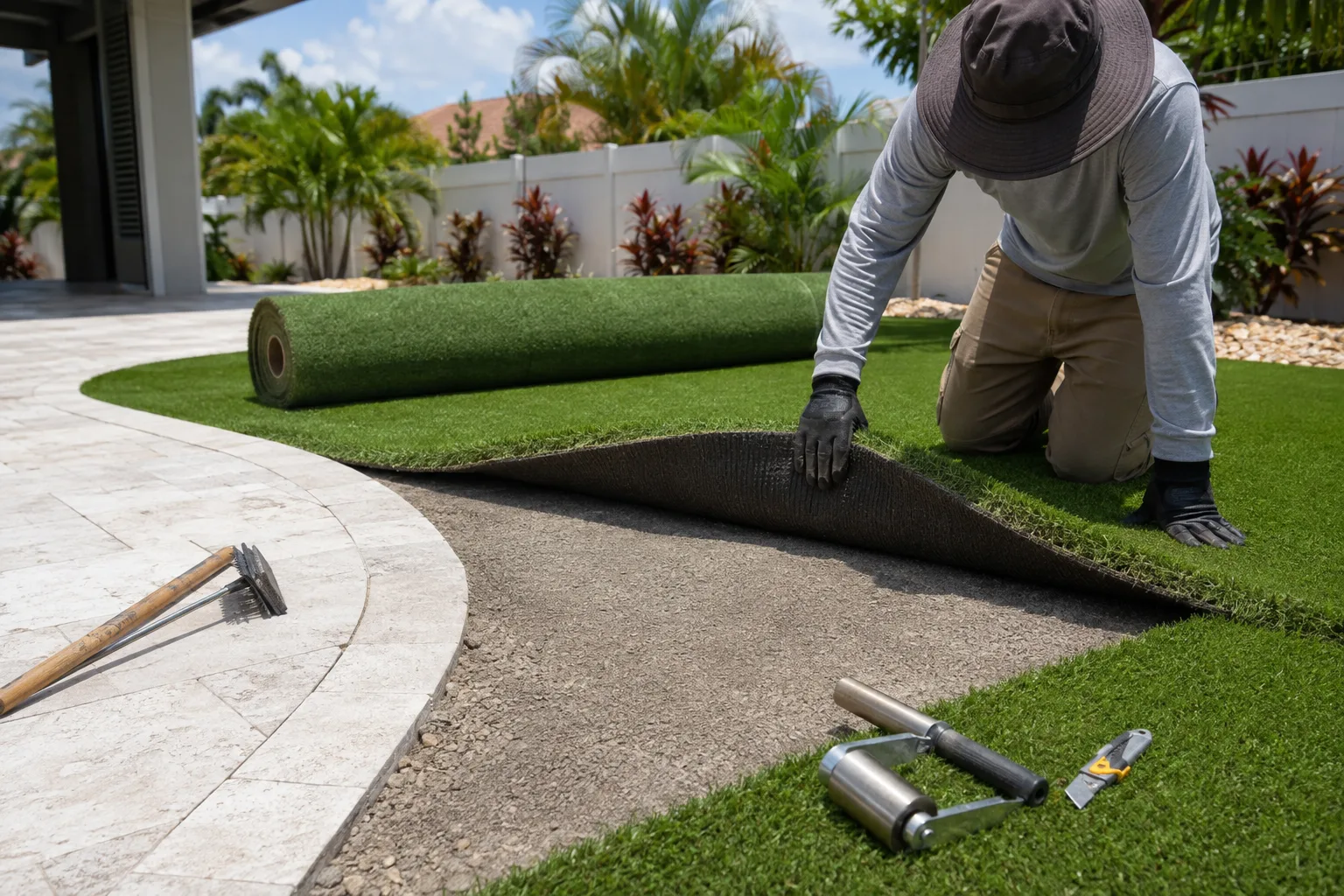
Turf replacement scene with old turf, exposed base, and new turf ready for review

Understand the existing assembly

Replacement is more than rolling new turf over an old footprint

An aging turf surface may show flattened fibers, open seams, lifted edges, uneven infill, fading, drainage concerns, contamination, or settlement. Those symptoms do not all have the same cause. The first task is to understand whether the issue is limited to the finish material or continues into the edge restraint, base, grade, or water route below.

A replacement scope then separates what can remain from what must be removed. Existing turf, infill, seam materials, damaged restraint, and unsuitable base may create different disposal and preparation needs. The goal is not to preserve old work at any cost; it is to avoid discarding sound components while preventing hidden defects from carrying into the new installation.
Complete or partial replacement

Material condition and failure pattern determine the reasonable boundary

Complete replacement is often clearer when wear is widespread, materials are no longer available, seams are failing in several areas, or the base needs broad correction. Partial replacement may be workable for a localized damaged section when compatible material can be sourced and a practical seam boundary exists away from the most visible or heavily used path.

The surrounding turf must be considered honestly. Age, ultraviolet exposure, pile direction, color variation, infill, and traffic can make a new patch stand apart. Soft areas, recurring ponding, edge movement, wrinkles, or settlement also point toward underlying conditions that cannot be judged from the top surface alone.

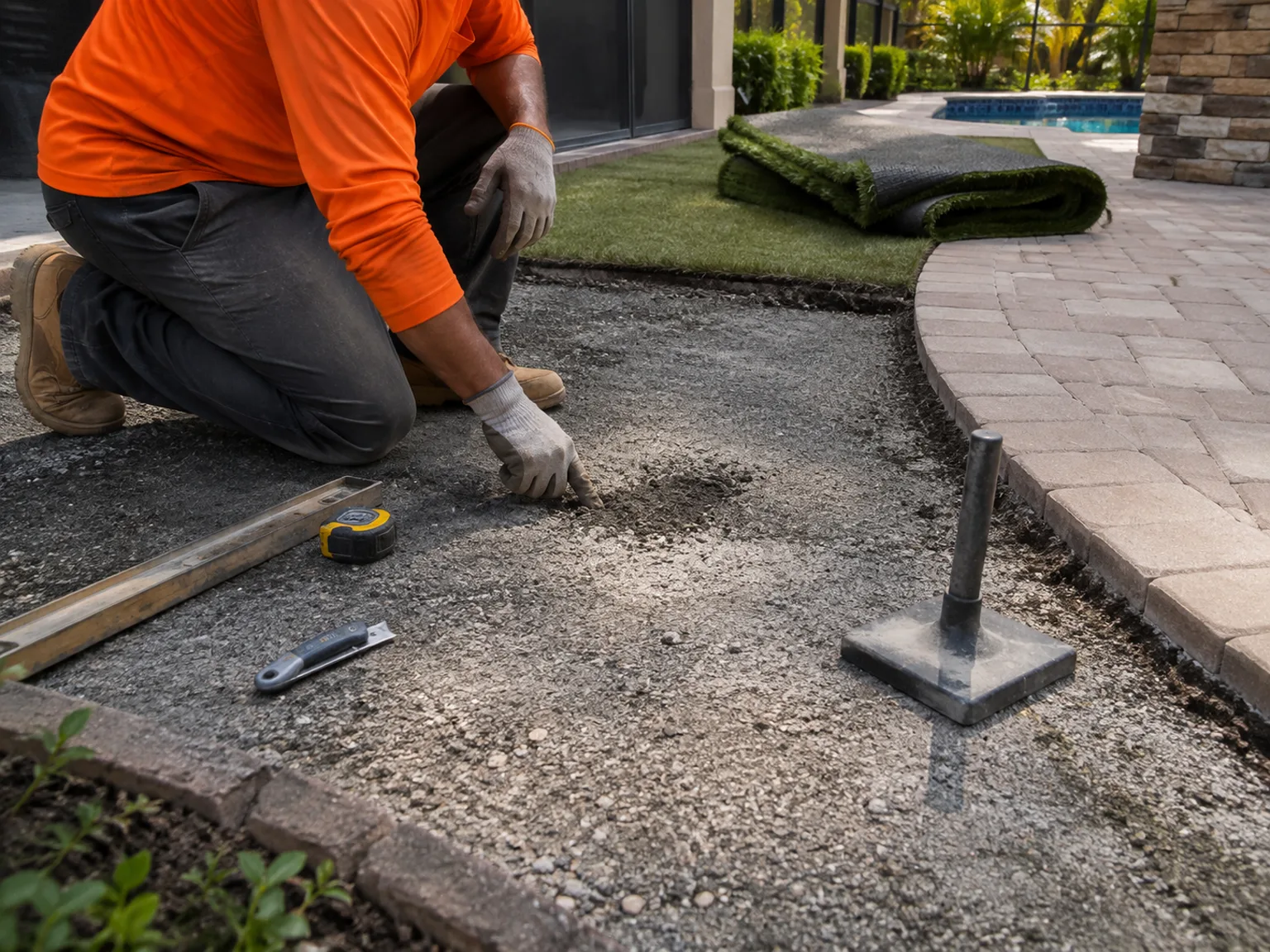
Turf replacement base diagnosis with existing material lifted for inspection.

Removal and reconstruction

Old materials come out before the base and drainage route are corrected

The agreed turf section is released from edges and seams, rolled or cut for handling, and removed with its loose infill and damaged accessories as defined in the scope. Disposal volume and access are planned before lifting material. Once exposed, the base can be checked for contamination, erosion, soft zones, settlement, grade, compaction, and blocked drainage paths.

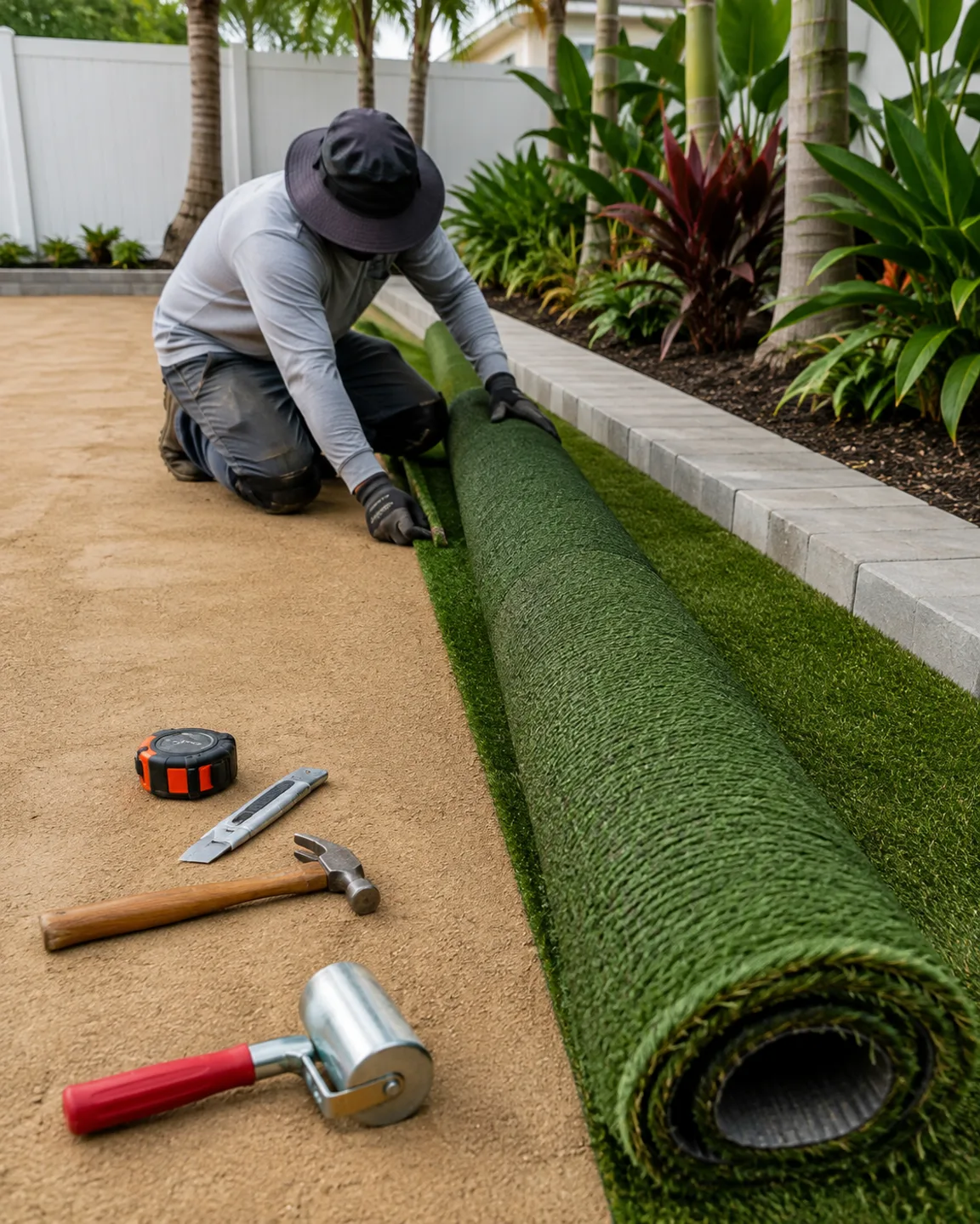
Reusable base must remain stable, correctly elevated, and suitable for the proposed system. Areas that fail that review are removed, rebuilt, added to, reshaped, or compacted as required. New turf is then laid with blade direction and seam locations coordinated to the remaining boundaries, secured at edges, infilled, groomed, and connected cleanly to hardscape or retained turf.

New turf alignment during replacement beside a prepared base.

Estimate and finished condition

The scope should state exactly what is removed, retained, corrected, and replaced

A replacement estimate should identify complete or partial boundaries, existing material removal, infill handling, disposal, edge and seam demolition, base inspection, included correction quantities, drainage work within scope, new turf, seam layout, restraint, transitions, infill, grooming, and cleanup. Unknown base conditions can be handled with clear allowances or a defined change process rather than silence.

Property owners should understand that removing the turf exposes conditions that were not fully visible beforehand. The scope should explain how additional soft base, buried material, roots, damaged drains, or unexpected elevations are documented. It should also define what surrounding turf and hardscape will remain and whether a visible transition is expected at a partial replacement.

Matching and reuse limits

A partial patch and an old base both need evidence before they are retained

New turf may differ from retained material in color, sheen, pile height, blade shape, backing, and wear even when the product name appears similar. Blade direction and lighting can increase that contrast. A partial replacement can restore function without becoming visually invisible, and moving the seam to a less prominent boundary may require replacing a larger section.

Likewise, an existing base is not reusable merely because it feels firm in one location. Incorrect grade, trapped organic material, poor compaction, erosion, or a failed water route can undermine new turf. If correction would become fragmented or leave uncertain areas between repairs, rebuilding a broader portion can be more practical than preserving isolated sections.

After replacement

Early observation helps confirm transitions and corrected areas remain stable

After the new surface is groomed, routine care includes debris removal, cleaning appropriate to use, brushing compressed fibers, and checking infill distribution. Partial replacement boundaries deserve extra attention because retained and new materials may respond differently to traffic. Furniture and equipment can return according to the agreed handoff and material guidance.

Edges, seams, repaired base zones, drains, and previous low areas should be observed through normal use and rainfall. New settlement, lifting, or water accumulation merits prompt review. Care cannot correct a continuing outside water source or root movement, but noticing changes early makes it easier to separate a localized adjustment from another broad replacement.

Replacement in Central Florida

Rain and intense exposure can reveal why an older installation changed

Deltona rainfall can expose settled base, blocked outlets, eroded edges, and runoff entering from patios, roofs, or neighboring grade. Lifting the old turf creates an opportunity to see whether water has been traveling as intended. That observation is more useful than assuming age alone explains every soft or uneven area.

Strong sun, reflected heat, irrigation, shade, roots, and organic debris can also leave different wear patterns across one installation. Those patterns help guide replacement boundaries and care planning. They do not establish a fixed service life, and this site does not use them to promise how long a new material will remain unchanged.

Replacement questions

When can an existing turf base be reused?

Reuse is reasonable only when the base is stable, suitably graded, adequately compacted, clean enough for the new assembly, and connected to a workable drainage route. Soft areas, erosion, settlement, contamination, or incorrect elevation require correction before new turf is placed.

When is partial turf replacement practical?

A localized boundary, compatible available material, sound surrounding turf, and a workable seam location can support partial replacement. Broad wear, multiple failures, unavailable matching turf, or base problems may make complete replacement clearer and more economical than several disconnected patches.

Will replacement turf match the older material exactly?

That should not be assumed. Age, sun exposure, wear, pile direction, infill, manufacturing variation, and discontinued products can create visible differences. Samples help compare materials, but a functional repair or partial replacement can still show a transition.

Can drainage be corrected during turf replacement?

Some grade, base, or drainage correction may be included once the old surface is removed and the condition is visible. Runoff from roofs, neighboring property, irrigation failures, or structural drainage may require separate work beyond the replacement scope.

What happens to removed turf and infill?

The scope should identify which materials are removed, how loose infill is handled, and whether hauling and disposal are included. Volume, contamination, access, and local disposal options can affect handling; no recycling destination is assumed before it is confirmed.

Ready to discuss this turf project?

Share the property details in an estimate request, or call to talk through the area and the work you have in mind.