Managed commercial spaces

Commercial Artificial Turf

Commercial artificial turf planning connects traffic, access, staging, preparation, drainage, seams, edges, equipment loads, concentrated wear, installation sequencing, and a documented maintenance plan.

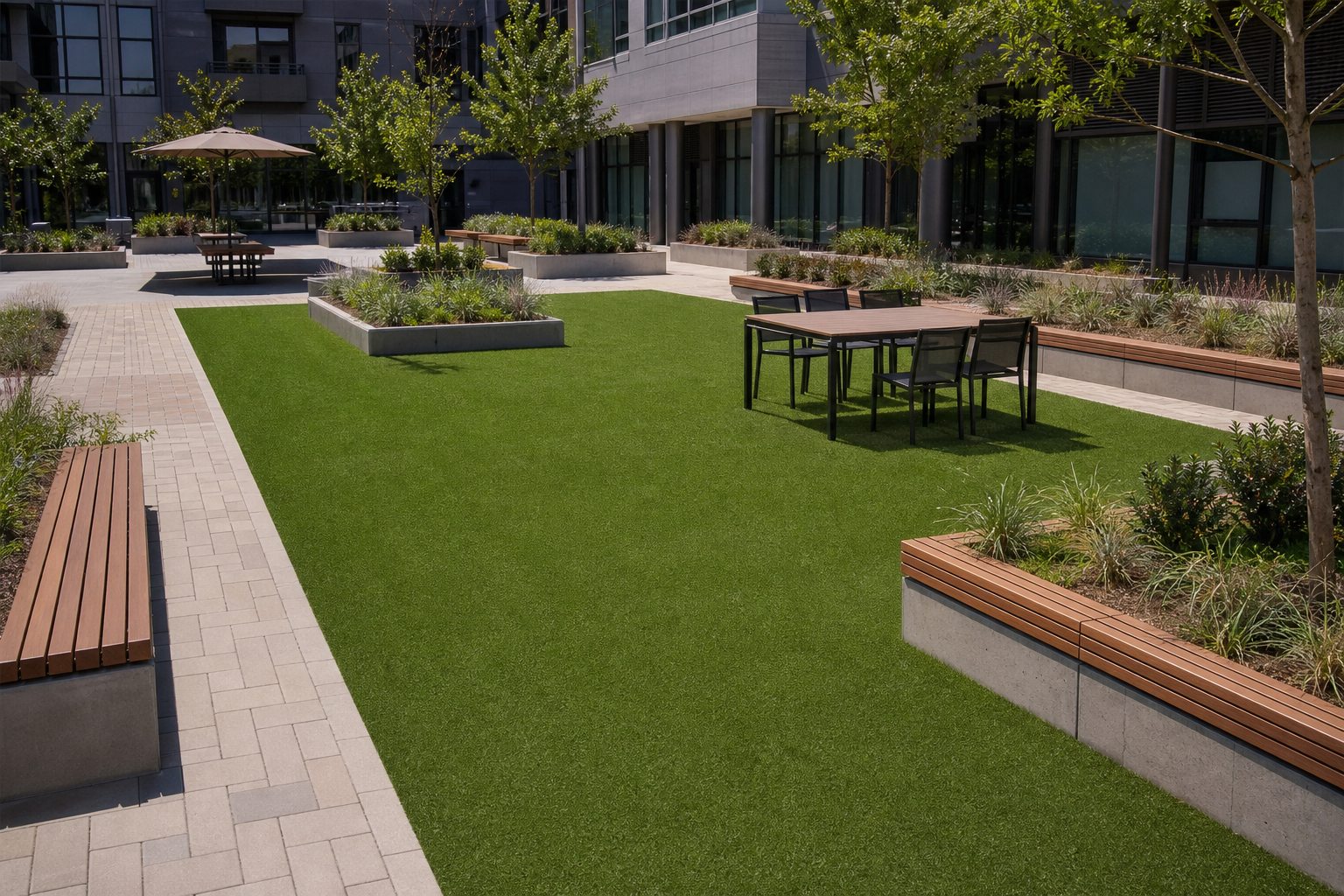
Managed commercial turf area connecting seating and pedestrian routes

Plan for managed use

Commercial turf has to work with operations as well as appearance

A courtyard, entry, common area, display space, or amenity zone may carry pedestrians, furniture, carts, deliveries, events, cleaning equipment, and service access through the same footprint. The turf layout should reflect those patterns so seams, transitions, and edges are not placed without regard to the way the property operates.

The installation assembly also needs to connect with existing hardscape, drains, doors, planters, utilities, and landscape maintenance. A polished finish is valuable, but practical decisions about base stability, water movement, concentrated loads, replacement access, and cleaning responsibility determine whether the surface remains manageable after opening.
Use and property conditions

Traffic maps and access routes reveal where the design will be tested

Expected daily foot traffic, queues, shortcuts, furniture layouts, event setups, carts, pets, service vehicles, and emergency or maintenance routes help define the usable turf area. A decorative zone with controlled access has different needs from a narrow connection that receives repeated turning, rolling loads, or temporary equipment.

Existing pavement, soil, planters, irrigation, trench drains, roof discharge, utility covers, settlement, and changes in elevation are recorded before preparation begins. Material delivery and debris removal also need a route through the managed property. Limited loading space, occupied entrances, elevators, gates, and tenant activity can constrain sequencing as much as the turf footprint does.

Sequenced installation

Preparation and layout should protect access while building a stable surface

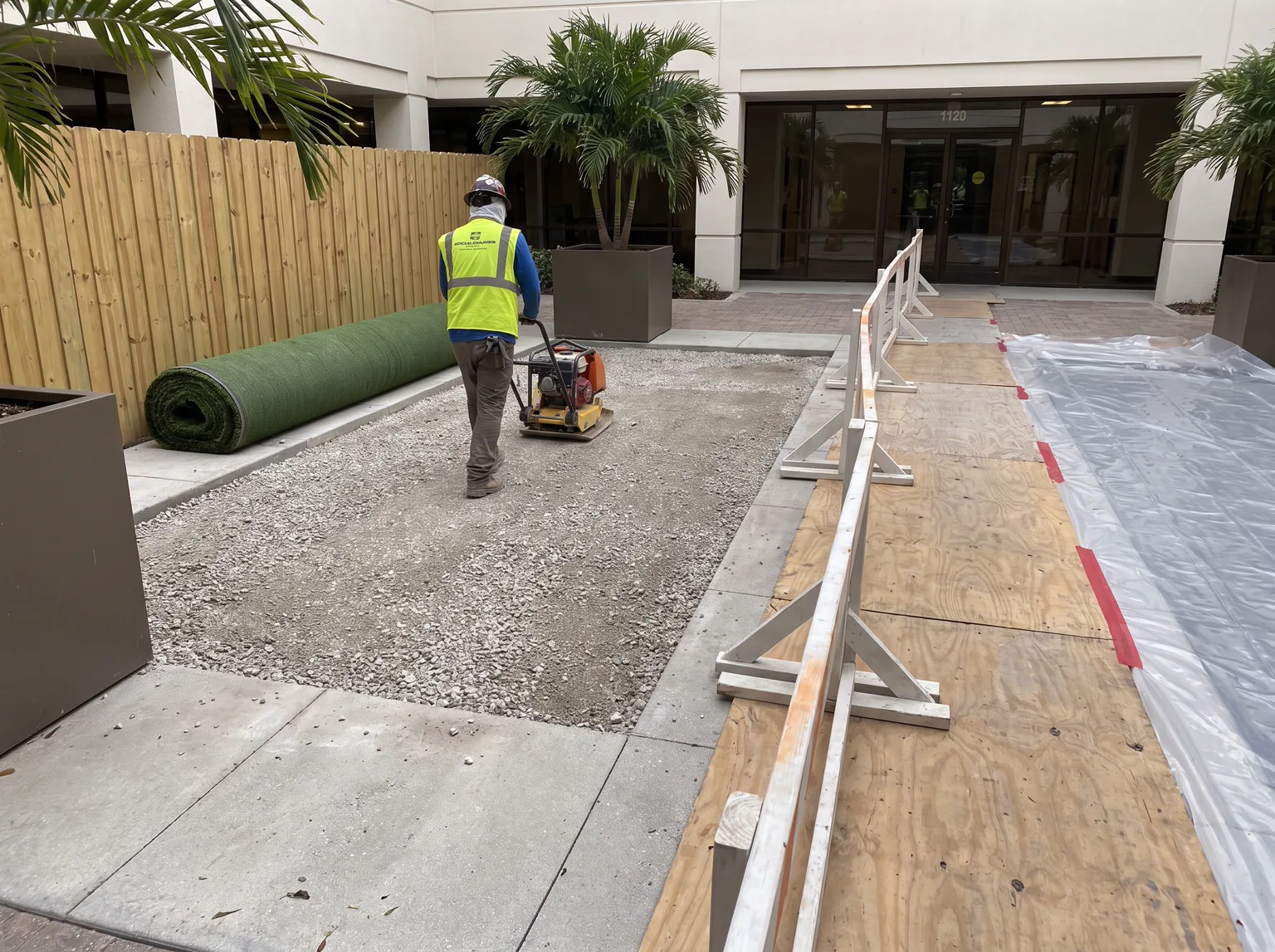
Work areas, material staging, debris movement, and temporary closures are coordinated before removal. Unsuitable surface material is taken out, grade and drainage are addressed within the turf scope, and aggregate is placed and compacted for the selected assembly and anticipated use. Drains, utility access, doors, and required routes remain identifiable throughout construction.

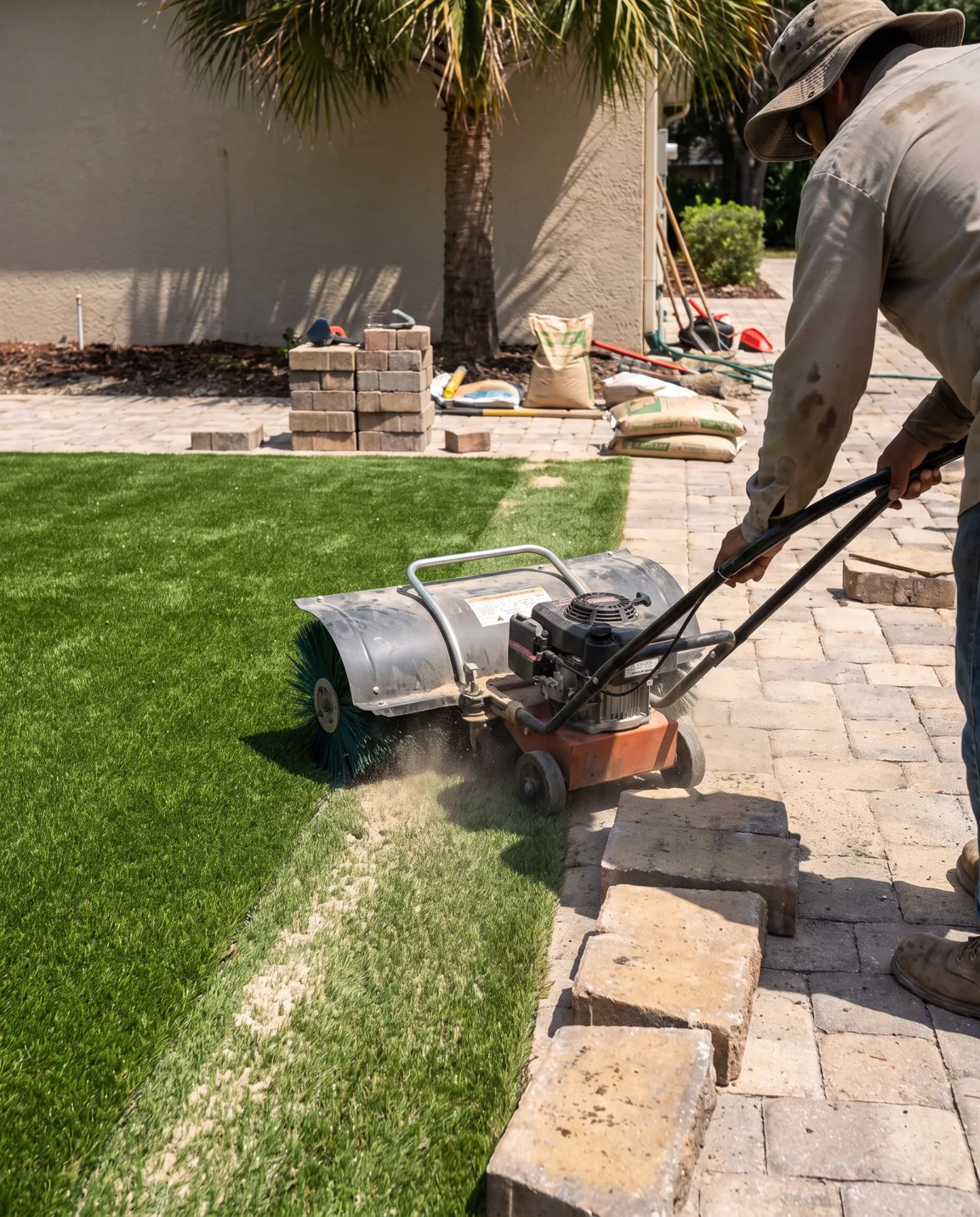
Roll orientation and seam placement account for primary viewing, concentrated traffic, cuts, and the dimensions of the space. Edges at planters, curbs, walls, paving, and access covers receive appropriate restraint or transitions. Turf is joined, trimmed, infilled, and groomed in an order that allows each completed zone to be inspected before furniture or operations return.

Commercial turf base preparation with protected pedestrian access.

Estimate and coordination

The scope should make access, phasing, loads, and handoff responsibilities explicit

A commercial estimate should identify the footprint, current surface, removal, disposal, base, drainage, turf, infill, seams, edges, transitions, utility details, staging location, work hours available to the project, and any required phase boundaries. It should also state which furniture, planters, equipment, or temporary barriers are moved by each party.

Property managers need realistic expectations about closures, noise, dust, material movement, curing or settlement considerations tied to other work, and the condition required before reopening. The schedule follows confirmed access and scope; uninterrupted use is not assumed. A clear handoff also identifies cleaning, inspection, and repair contacts without presenting routine maintenance as included indefinitely.

Operational limits

Synthetic turf is not intended for every load, heat source, or service route

Heavy rolling loads, narrow wheels, fixed equipment, repeated sharp turns, grease, hot exhaust, reflected heat, and temporary structures can affect fibers, backing, infill, seams, or the base. These uses need to be identified rather than treated as ordinary pedestrian traffic. Protective measures may help for defined events, but they do not convert the area into an unrestricted equipment surface.

Turf also does not repair failing pavement, active settlement, chronic runoff, or structural drainage. Where maintenance vehicles require regular access, a hard route may be more suitable. A mixed plan can reserve turf for pedestrian or visual zones while keeping service corridors, loading areas, cooking locations, and concentrated equipment on materials intended for those conditions.

Maintenance planning

Named responsibility and regular inspection reduce avoidable wear

A maintenance plan should assign routine debris removal, spill response, brushing, infill attention, and inspection of seams, edges, drains, transitions, and high-traffic paths. Event layouts and movable furniture can be rotated where practical. Cleaning methods need to suit the installed materials and the substances likely to reach the surface.

Concentrated wear, an opening seam, settlement, displaced infill, or a damaged edge should be documented early. Access covers and drains must remain usable, and landscaping work should avoid pulling perimeter details loose. If operations change, the turf area may need reassessment before heavier furniture, carts, cooking equipment, or recurring event structures are introduced.

Commercial artificial turf transition at a high-traffic hardscape edge.

Commercial properties in Deltona

Rainfall, direct sun, irrigation, and tenant access affect the operating plan

Central Florida downpours can move water rapidly from roofs, paved walks, courtyards, and parking edges. Existing drains and runoff paths need to remain functional through the turf area. A low point beside an entrance or planter can become an operational problem even when the surface above it is permeable.

Strong sun and reflected heat may affect comfort and material exposure, while shaded courtyards can collect damp organic debris from planters and trees. Irrigation overspray adds another water source. These conditions influence layout, cleaning, and inspection frequency, but they do not justify fixed performance claims without a specific property and assembly.

Commercial turf questions

How are commercial traffic patterns used in turf planning?

Daily pedestrian routes, queues, shortcuts, furniture, carts, deliveries, service access, and event layouts show where wear and turning will concentrate. That information guides the turf boundary, base, seam placement, transitions, and whether a hard-surface route belongs in the plan.

Can installation be phased around an occupied property?

Phasing may be possible when staging, material movement, safe separation, temporary closures, and reopening conditions are defined. The schedule cannot assume uninterrupted access. Tenant activity, deliveries, other trades, and the number of workable zones all affect the sequence.

Can heavy furniture or equipment sit on commercial turf?

The weight, feet or wheels, duration, movement, heat, and base below the turf all matter. Concentrated loads can compress fibers or infill and may affect seams or the foundation. Equipment and recurring event uses need specific review before placement.

How is runoff handled near commercial hardscape?

Roof discharge, paving slope, trench drains, planters, irrigation, and neighboring elevations are mapped before the turf assembly is set. Permeable backing is one layer; water still needs a clear route through the base or into the property's existing drainage approach.

What belongs in a commercial turf maintenance plan?

Assign debris removal, spill response, brushing, infill attention, and inspection of seams, edges, drains, transitions, and concentrated-wear areas. The plan should also address event setup, furniture movement, landscaping contact, access covers, documentation, and timely repair reporting.

Ready to discuss this turf project?

Share the property details in an estimate request, or call to talk through the area and the work you have in mind.