Complete turf project planning

Artificial Turf Installation

Artificial turf installation brings surface removal, grading, drainage, base construction, layout, seams, edges, infill, and final grooming into one coordinated scope for the property.

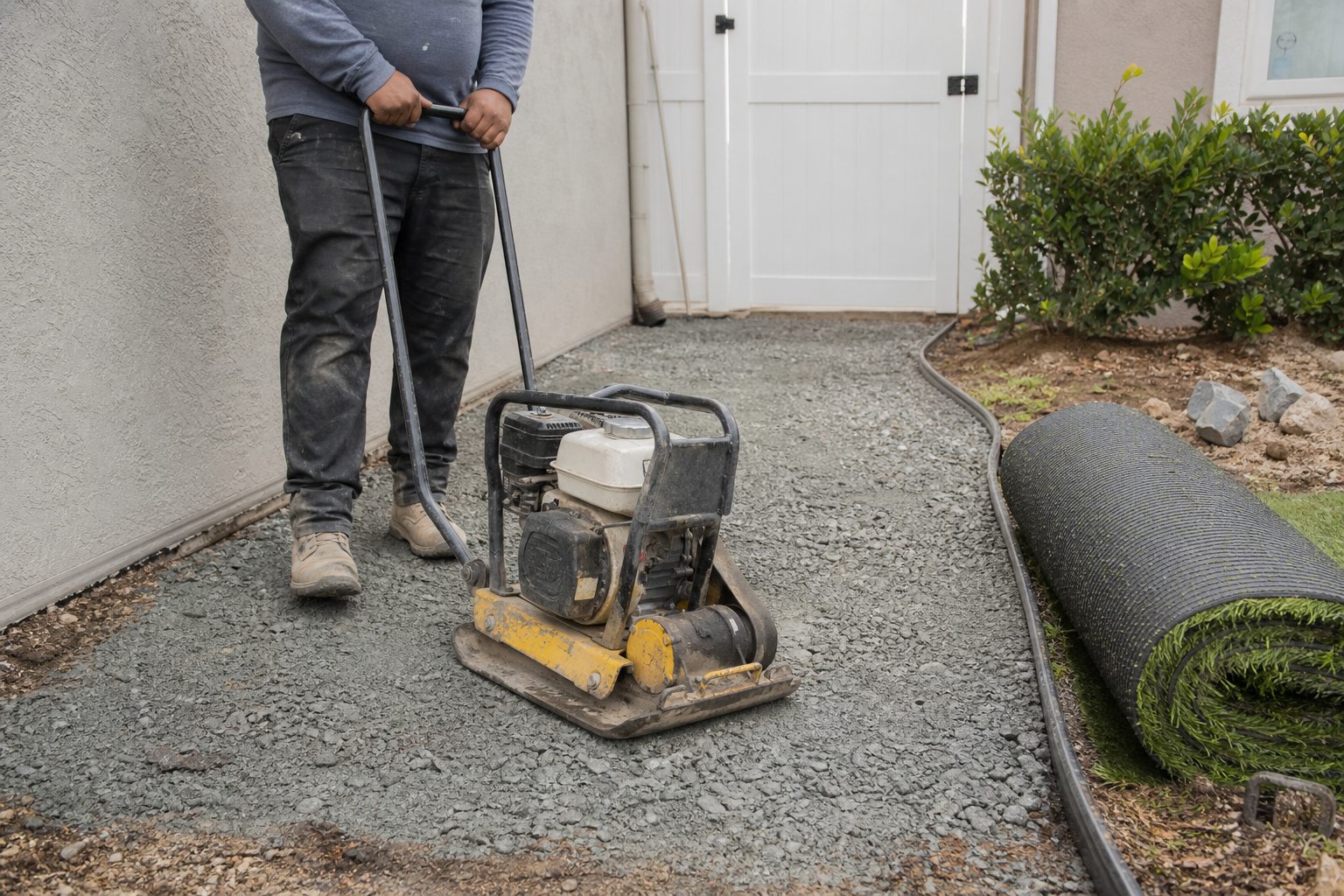
Aggregate base preparation and compaction before turf placement

Start below the surface

A turf installation is a layered outdoor construction project

The visible turf is only the finish layer. A sound installation begins by identifying what is on the ground now, how the space is used, where water travels, and how the new surface will meet patios, walks, planting beds, fences, drains, and structures. Those facts control the preparation and layout more than a sample viewed by itself.

A complete scope separates removal, disposal, earthwork, aggregate, compaction, turf material, seam supplies, perimeter restraint, infill, and cleanup. Keeping those parts visible makes estimates easier to compare and helps a property owner understand which condition is being corrected, which material is being installed, and what the finished area will connect to.
Fit and existing conditions

The current surface determines the starting point

Artificial turf can fit a yard, side area, activity space, or managed landscape where a consistent surface is wanted and the boundaries can be built cleanly. The useful questions concern daily traffic, furniture, pets, play, access, shade, falling debris, irrigation, nearby roots, and whether the area connects to a pool deck or other hardscape.

Natural grass, loose soil, old synthetic turf, pavers, concrete, and compacted aggregate do not present the same starting condition. Soft material, organic growth, unstable fill, severe settlement, or an unsuitable hard surface may require removal or correction. Installing directly over a questionable surface can preserve the problem beneath a new finish rather than resolve it.

Preparation and installation

Grade, base, layout, and finishing work are coordinated in sequence

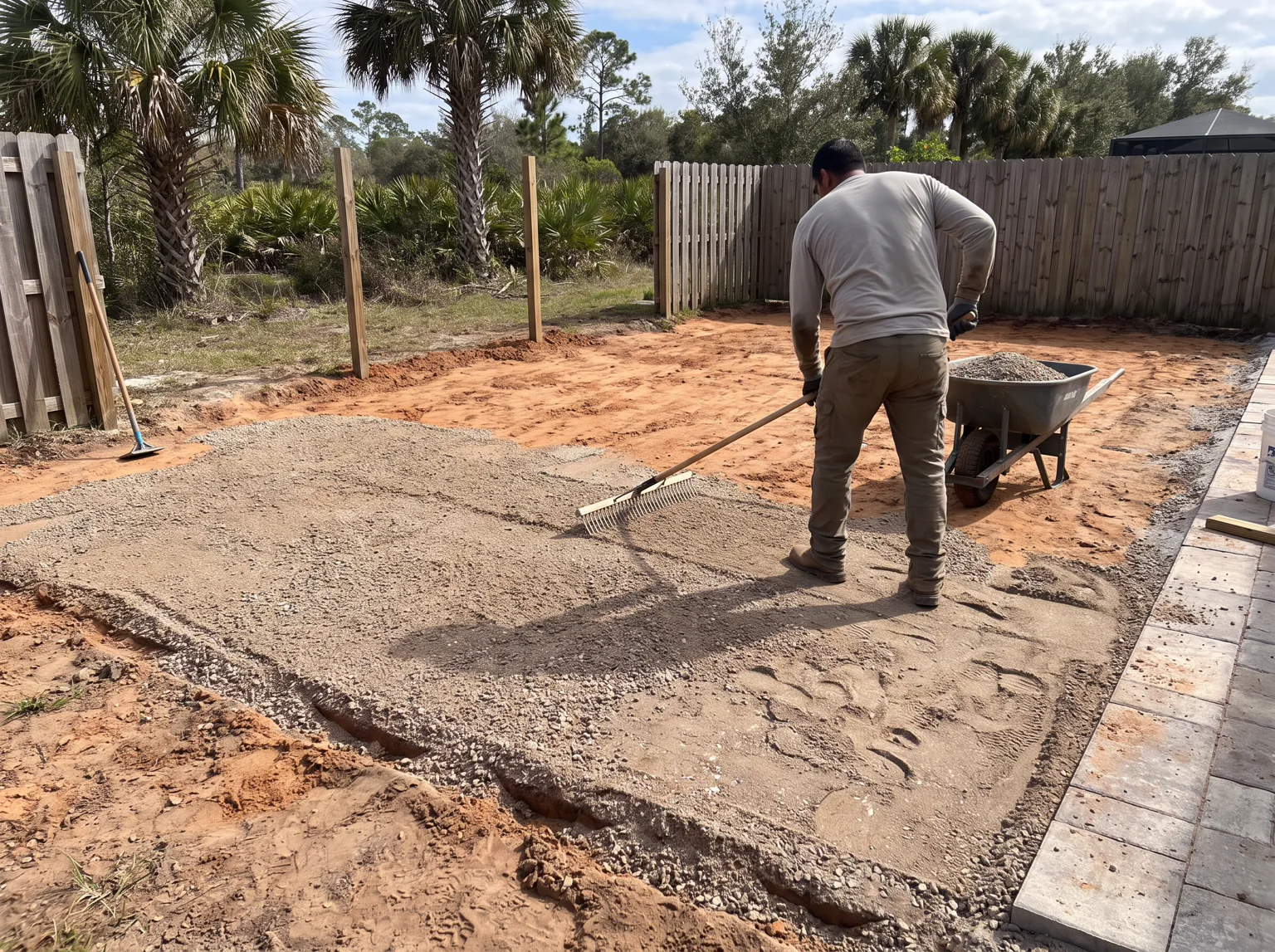
After the removal boundary is set, unwanted sod, roots, loose material, or older turf can be taken out to the depth established for the assembly. The exposed area is shaped to a workable grade. Aggregate type and depth are selected for the surface and intended use, placed in controlled lifts when needed, and compacted so the base is firm and even rather than loose underfoot.

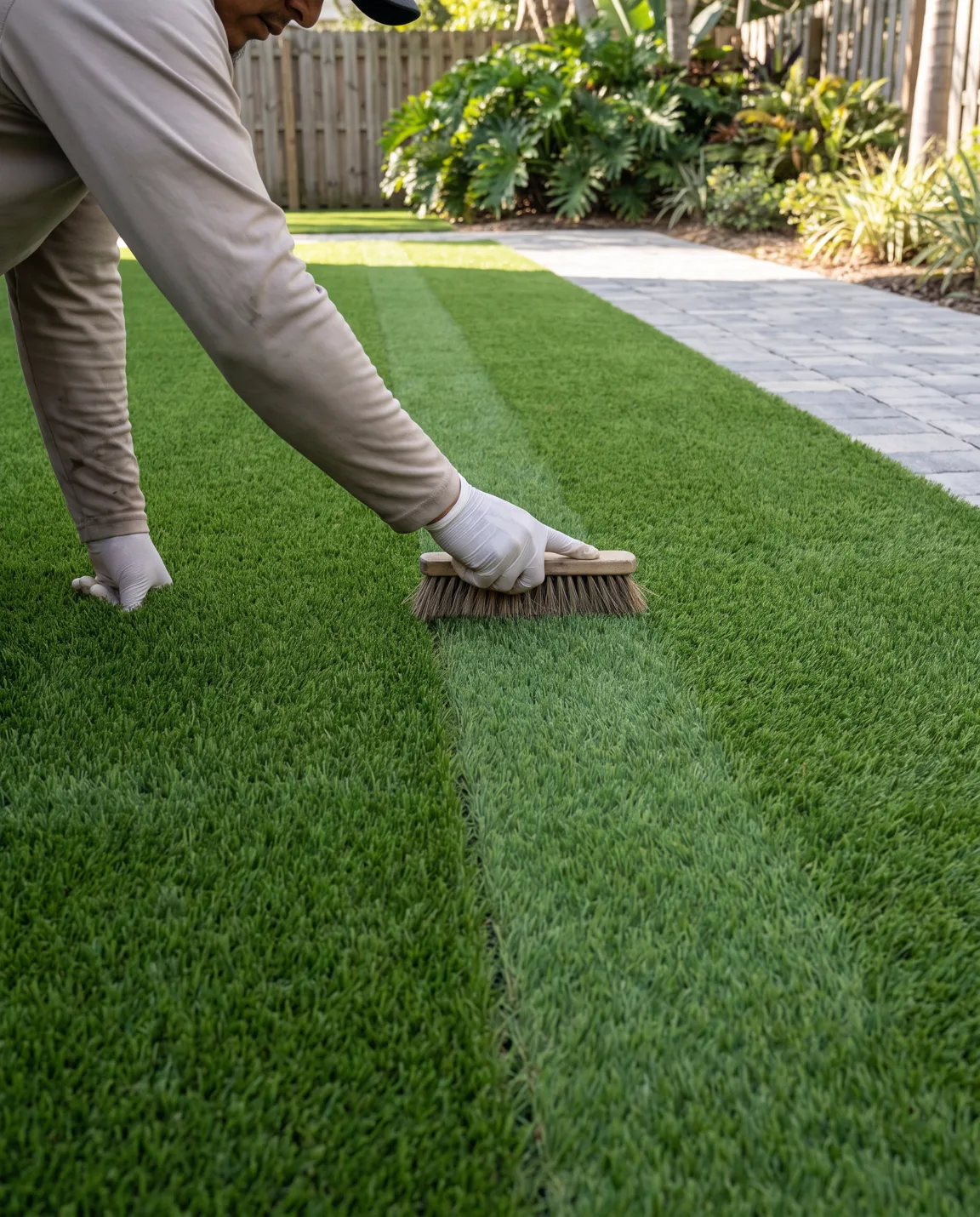
Turf rolls are then oriented to keep blade direction consistent and to place seams where cuts, traffic, and normal viewing make sense. Perimeters are secured with an edge method suited to the adjoining material. Seams are aligned and joined, openings and transitions are cut carefully, infill is distributed for the selected system, and the fibers are groomed before the work area is cleaned.

Compacted base grading and preparation before artificial turf installation.

Scope and estimate factors

Measurements alone do not describe the whole job

Square footage establishes material quantity, but access, excavation depth, disposal volume, base corrections, curved edges, narrow cuts, seam count, and transitions also affect the work. A long carry through a side gate differs from direct access. Likewise, a simple rectangle beside a concrete walk differs from a shape that wraps posts, beds, drains, or several elevations.

The written scope should identify the removal limit, intended finished elevation, base work, drainage features being retained or adjusted, turf and infill selections, seam approach, edge restraint, transitions, cleanup, and any care information provided at completion. Items outside the turf work, such as irrigation redesign, structural drainage construction, or new concrete, remain separate unless expressly included.

Final grooming across a nearly invisible artificial turf seam beside a hardscape edge.

Limits and alternatives

Some surfaces need correction before turf is a reasonable finish

Turf does not stabilize moving soil, repair a failing retaining edge, or remove a water source by covering it. Persistent ponding, erosion, leaking irrigation, root movement, or settlement deserves attention before the finish material is selected. Where the cause falls outside normal turf preparation, drainage, irrigation, tree, or structural work may need to come first.

Keeping an existing hard surface can sometimes reduce excavation, but only when its elevation, condition, transitions, and water movement support the proposed assembly. Cracked, uneven, contaminated, or poorly pitched surfaces may be unsuitable. A smaller turf area, a different boundary, or a mix of turf and another surface can also be more practical than covering every available square foot.

After installation

Routine care protects appearance and keeps small issues visible

Normal care includes removing leaves and organic debris, picking up solid waste, rinsing areas when use calls for it, and brushing fibers where traffic presses them down. Furniture and movable equipment can be shifted periodically so one path or footprint does not carry all the wear. The care approach should follow the selected turf, infill, and surrounding conditions.

Edges, seams, transitions, drains, and low areas are worth checking during routine cleanup. A lifted edge, opening seam, displaced infill, or new soft spot is easier to evaluate while it remains localized. Heat from reflected sunlight, grills, fire features, and other hot objects also needs practical separation from synthetic turf rather than reliance on the surface to tolerate every exposure.

Deltona and Central Florida

Rain, irrigation, shade, and hardscape connections deserve close attention

Heavy Central Florida rain can reveal low areas and weak transitions quickly. Existing water movement should be observed around patios, pool decks, downspouts, planting beds, and neighboring surfaces before the grade and base are finalized. Turf can allow water through its backing, but the complete assembly and the route beneath it still have to move water away appropriately.

Deltona properties may also combine strong sun with shaded pockets, irrigation overspray, tree litter, and roots near the work boundary. Those conditions affect debris accumulation, cleaning access, edge placement, and material exposure. They are practical design inputs, not a basis for claiming the same construction detail or maintenance routine fits every property.

Installation planning questions

Is the same base used for every turf installation?

No. The existing surface, intended use, excavation depth, finished elevation, and water movement affect aggregate selection and base construction. The scope should state what material and compaction work are included instead of assuming one assembly fits every property.

How are turf seam locations planned?

Roll width, blade direction, the shape of the area, viewing angles, traffic paths, and required cuts all influence seam placement. The goal is a workable layout with secure joins and reasonable material use, not a claim that every seam will disappear.

Does permeable turf automatically correct yard drainage?

No. Water has to pass through the turf system and continue through the base or an appropriate drainage route. Existing low areas, blocked outlets, hardscape runoff, irrigation, and soil conditions may require separate correction before turf installation proceeds.

What happens where turf meets patios or planting beds?

Those transitions are measured and detailed as part of the layout. Finished elevation, edge restraint, cutting, drainage, and the adjoining material all matter. A clear scope identifies the intended connection and any existing edge that must remain undisturbed.

What routine care follows a new installation?

Care normally includes debris removal, attention to pet or spill areas, occasional rinsing when appropriate, fiber brushing in compressed zones, and periodic checks of seams, edges, drains, and infill. Exact guidance follows the material and use of the installed area.

Ready to discuss this turf project?

Share the property details in an estimate request, or call to talk through the area and the work you have in mind.